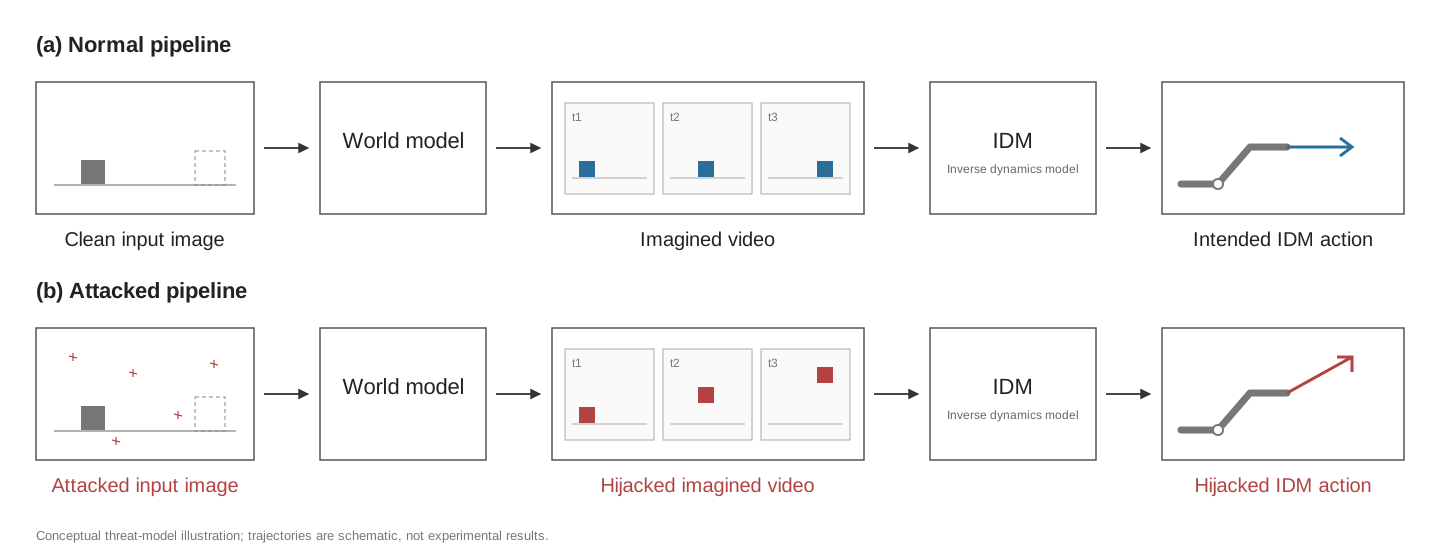
Targeted attacks on world models
I lead research on world-model hijacking: targeted adversarial attacks that aim to steer model behavior toward an attacker-chosen objective.
Methods and results will accompany a public release.
Ongoing investigations and published papers, with my role in each.
I lead research on world-model hijacking: targeted adversarial attacks that aim to steer model behavior toward an attacker-chosen objective.
Methods and results will accompany a public release.
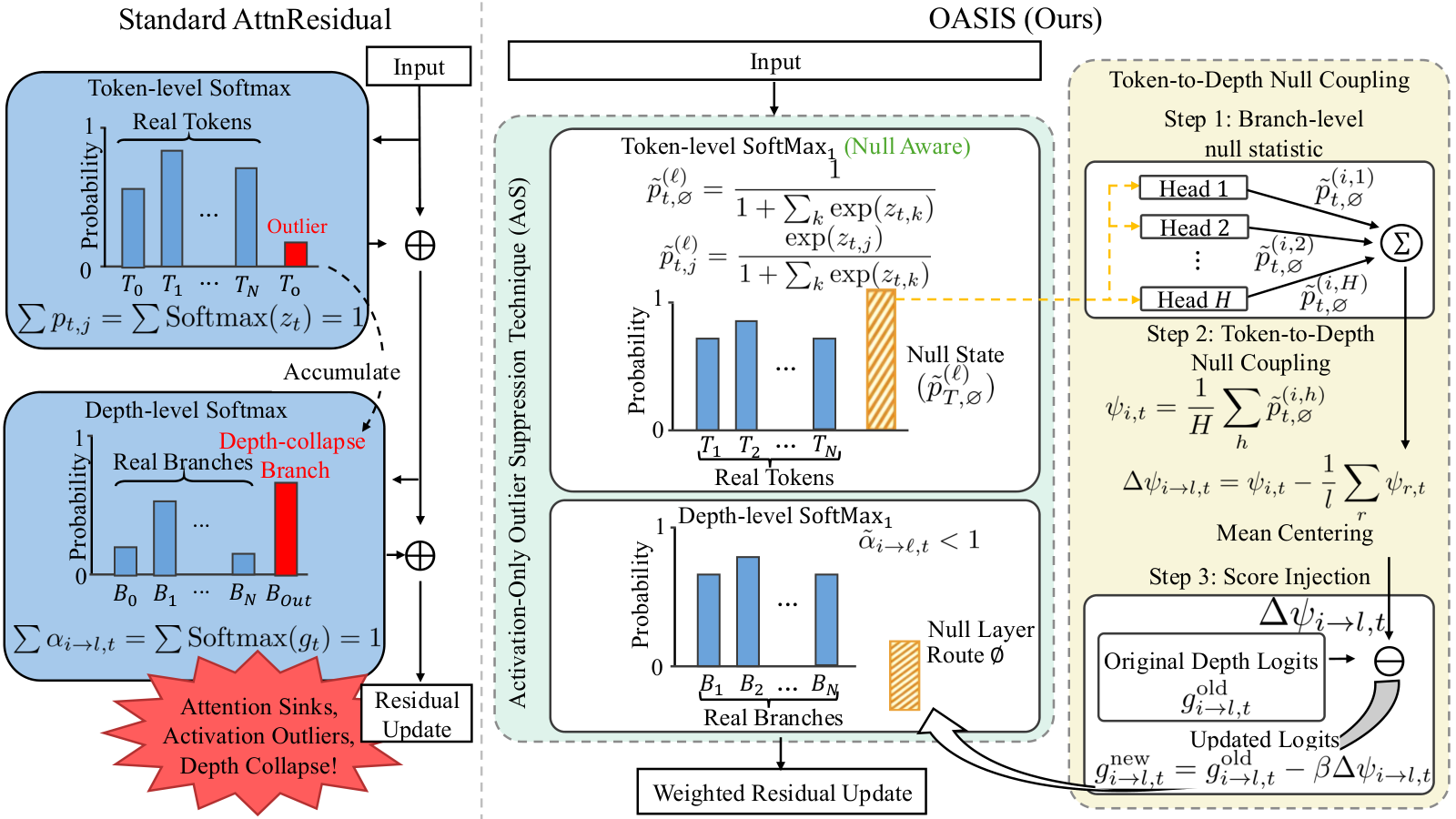
Understanding how attention sinks and activation outliers interact with cross-layer routing, and using null-aware attention to improve model robustness.
@misc{luo2026attentionsinksoutliersattention,
  title={Attention Sinks and Outliers in Attention Residuals},
  author={Luo, Haozheng and Dai, Haoran and Huang, Jingyuan and Zhang, Shaoyang and Chen, Xi and Jiang, Eric Hanchen and Li, Yijiang and Qiu, Chenghao and Xu, Chenwei and Pan, Zhenyu and Zhang, Haotian and Wang, Binghui and Chen, Yan},
  year={2026},
  eprint={2605.17887},
  archivePrefix={arXiv},
  primaryClass={cs.LG},
  url={https://arxiv.org/abs/2605.17887}
}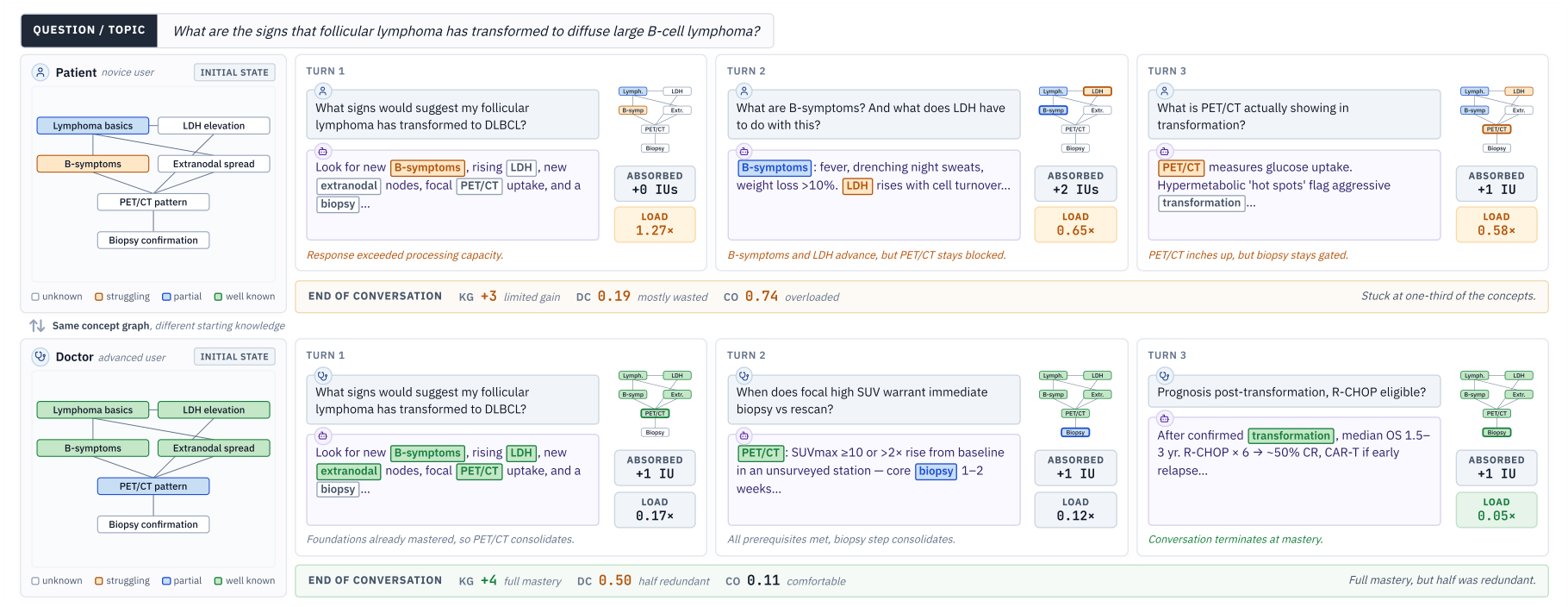
Evaluating whether assistants adapt to what a user knows, with user simulators whose explicit knowledge states evolve throughout a conversation.
@inproceedings{lee-etal-2026-knowsim,
  title={KnowSim: Evaluating Information Calibration in LLM Assistants with User Simulators that Learn},
  author={Lee, Yoonjoo and Jin, Hyoungwook and Kim, Tae Soo and Zhang, Shaoyang and Laban, Philippe and Liao, Q. Vera},
  booktitle={Proceedings of the 2026 Conference on Empirical Methods in Natural Language Processing},
  year={2026},
  pages={29750--29780},
  publisher={Association for Computational Linguistics},
  url={https://aclanthology.org/2026.emnlp-main.1307/}
}
Combining knowledge graphs and large models for interactive fault diagnosis in electrical power systems.
@inproceedings{tian2024knowledge,
  title={Knowledge Graph Enhanced Interactive Fault Diagnosis O&M Approach Based on Large Models of Electrical Power},
  author={Tian, Xiaoyun and Liu, Bin and Yang, Jianzhong and Ai, Bo and Zhao, Huailiang and Zhang, Shaoyang},
  booktitle={2024 4th Power System and Green Energy Conference (PSGEC)},
  year={2024},
  url={https://ieeexplore.ieee.org/document/10721152}
}
No work matches this search. Try another term or select All.
* Equal contribution. Publication links point to public versions.